Romans 12:15 tells us to “Rejoice with those who rejoice, weep with those who weep.” I’ve found that we believers often do a better job of weeping with others than we do rejoicing. Speaking only for myself, rejoicing with someone can be difficult because I want what they have as well. Being genuinely happy for someone can be challenging when my circumstances don’t seem as good as someone else’s.
Some years ago my brother, Doug, dropped a three-word phrase on me that started a lot of soul searching: “Comparison kills contentment.” I might be happy with what I have UNTIL I see what you have. Only then do I realize mine doesn’t quite measure up to yours. This, incidentally, is part of why a lot of time on social media isn’t a good thing.
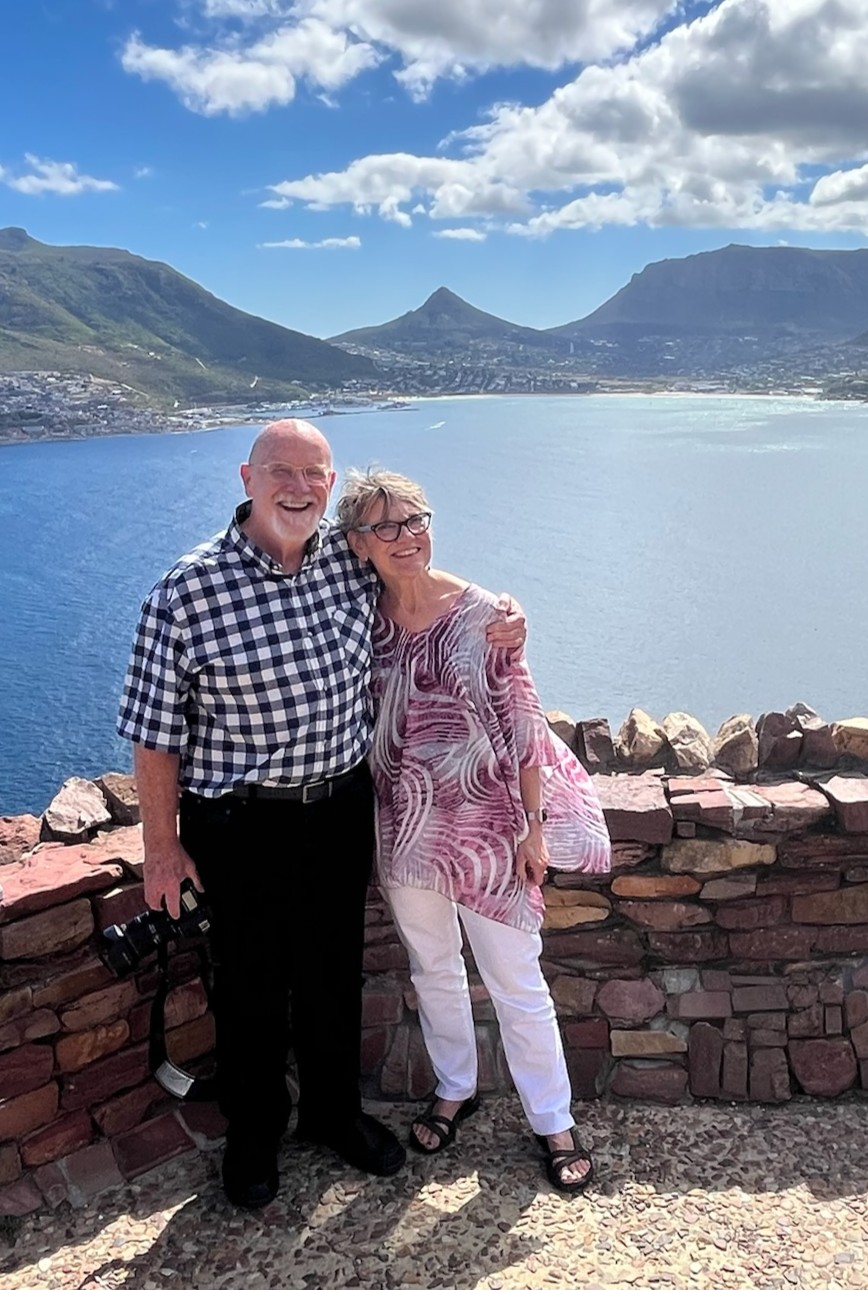
Speaking of my brother, He and Debbie are near the end of a cruise that started in Australia and will end in New York. From time to time, they’re able to send photos my way when the WiFi is good. If you want to join me in rejoicing with them, I made an online album that can be accessed here.
Unless you’ve been living under a rock far away from civilization, you’ve heard of artificial intelligence (AI). If you’re like most people, you probably have strong opinions about it. What fascinates me is how people who are similar in many ways can hold wildly different views on AI. Those differences are reflected in the title of this article—and, until recently, I was firmly on the skeptical end of the spectrum.
My own opinion on AI has been changing from very negative toward cautiously positive. That shift didn’t come from theory or hype, but from actually using AI. It doesn’t do my thinking for me, but it has sped the process up in noticeable and often helpful ways.
Before the computer age, research was painfully tedious. (Raise your hand if your only way to find library books was a card catalog.) With the arrival of computers in the latter half of the last century, the time it took to chase down facts shrank from weeks to days, then to hours, then minutes. AI represents the next step in that progression. It’s essentially a search engine on steroids, reducing the time needed to locate information to fractions of a second.
That speed matters because it changes how we spend our mental energy. Instead of hunting for information, we can devote more effort to evaluating it, understanding it, and connecting it to real‑world situations. Used well, AI makes research faster and less painful, allowing us to focus on judgment rather than retrieval.
Someone with the gift of understatement might say that AI is a revolutionary invention. About six hundred years ago, there was another invention that reshaped how people accessed information: the printing press. The parallels—and the differences—are worth considering. In preparing to write this article, I asked Microsoft’s Copilot to compare and contrast the printing press and AI. Within seconds, it produced a thoughtful, multi‑page response. What impressed me wasn’t originality or insight, but speed, organization, and clarity. The thinking still had to be mine; the tool simply accelerated the process.
That distinction is important. However advanced AI becomes, it will never be a thinking, feeling, or sentient being. It does not understand truth, wisdom, or meaning. It processes patterns and probabilities, nothing more. When people talk about AI as if it “knows,” “believes,” or “decides,” they are assigning human qualities to a tool—and that’s where misuse begins.
Used wisely, AI can sharpen our thinking. Used carelessly, it can dull it. The responsibility rests entirely with us. As with every powerful invention before it, AI demands discernment. Be careful out there—and above all, keep thinking.
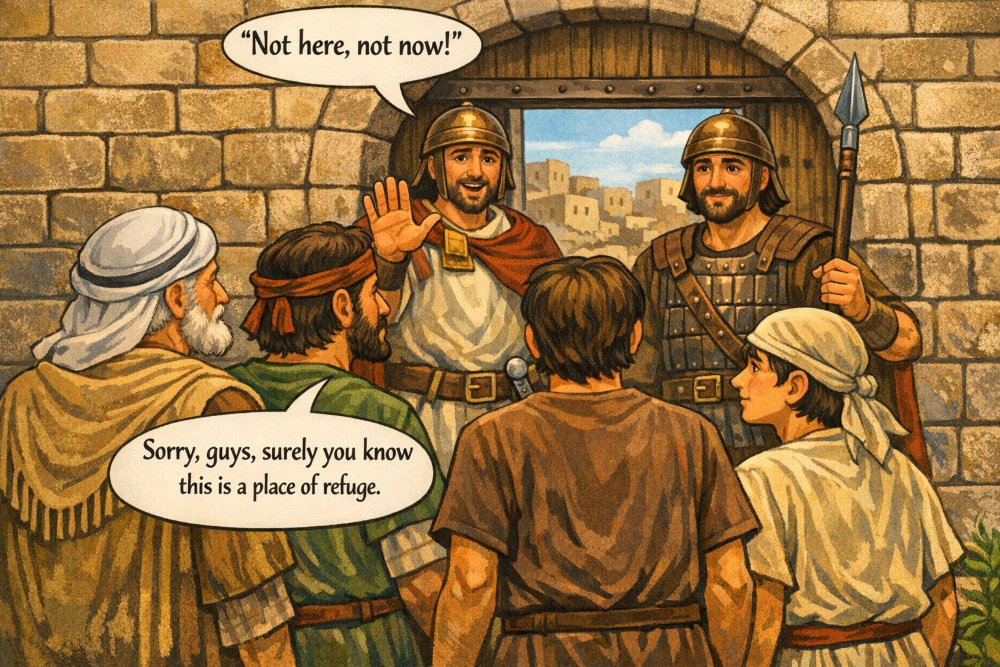
During my quiet time This morning, I was reading God’s instructions to Moses and the nation on how to deal with someone who’d committed manslaughter. Someone who had accidently killed another could flee to a “city of refuge” where he or she would have protection from the family and friends of the one who had died. The downside of this was the manslayer had to stay put, possibly for years:
Num. 35:28 For he must remain in his city of refuge until the death of the high priest, but after the death of the high priest the manslayer may return to the land of his possession (ESV).
If the manslayer tried to relocate before the death of the high priest, he or she would be fair game for anyone wanting to get revenge. But what did the high priest’s death have to do with all of this? With the help of a few study resources, I think I might have an answer.
This regulation is something of a preview of what would come centuries later. Jesus is our great high priest. His sacrifice of himself was, and is, full payment for all our sin. This ancient law, then, foreshadows a release from debt by the death of God’s high priest. (Heb. 9:11-14)
I was also taken by the short verse that comes a little later in the text:
Num. 35:32 And you shall accept no ransom for him who has fled to his city of refuge, that he may return to dwell in the land before the death of the high priest (ESV).
So even if the manslayer had plenty of money, it couldn’t be used to buy freedom before the death of the high priest. In the same way, we can’t do anything to earn or buy our way out of the debt our many sins incurred against us. Only Jesus was capable of paying that debt by his death. God announced his acceptance of payment by raising him from the dead three days later.
Thank you, Jesus, for loving us! Thank you for letting that love lead you to the cross! Thank you for paying the debt you did not owe, because I could never have paid that debt on my own!
Today, Feb. 8, is the 92nd anniversary of the birth of a wonderful man, Franklin D. R. Hall (1934-2019). His two middle names were actually Delano Roosevelt. His dear mother thought the President walked on water, so she gave his name to her newborn son. (The funny thing is, Franklin grew up to be a staunch Republican.) Nine days after he was born, Franklin’s mother passed away.
Frankin spent his early years with his maternal grandmother. After she died, he went to live with his uncle and aunt in Newport News Virginia. For the rest of his life, Franklin honored them as his parents.
Franklin Hall (L) and me at my ordination service, June, 1990
He surrendered his life to God through Christ as a teenager. Sensing that God was calling him to preach, he attended and graduated from Moody Bible Institute in Chicago. Then he came back home where he earned a bachelor’s degree at The College of William and Mary in Williamsburg.
Our paths crossed in 1986 when Franklin interviewed Yvonne and me for a staff position at the church where he was pastor. As a result, in October of 1986 I became the first full-time minister of music in the history of Bethel Baptist Church, Yorktown, Va. Franklin and I served together there until 1999. Looking back, I fondly recall some of his characteristics:
His zeal for God
Franklin was quick to tell anyone that God alone deserved all the credit for any good thing in his life. His love of God led him to promote missions in a big way. Under his leadership, Bethel continually set and broke records for their giving to denominational missions causes. His zeal was obvious in his preaching. He truly was a dying man preaching to dying men; a beggar telling other beggars where to find bread.
His folksy wisdom
Ecclesiastes 3 says, “For everything there is a season, and a time for every matter under heaven” (ESV); the following verses give a dozen examples. Franklin usually had a good grasp on what to do, and what not to do most of the time. He also had a lot of quips that laid things out in a clear way. A few of my favorites are:
Everybody has friends.
You can’t unscramble eggs.
Don’t let the camel’s nose in the tent.
These, along with many others probably weren’t original to him, but I’d never heard them before meeting him. Now, I can’t forget them.
His patience
Being a young man in my 20’s, I already knew that I already knew everything about, well, everything. I couldn’t have been more wrong! (He often “joked” about me giving him grey hairs.)
Franklin’s tenure at Bethel ended when he retired. My service ended a week later with an unpleasant resignation. At the time, I blamed him for the circumstances leading to my departure. Since then, however, I believe I was wrong about much of it. The fact is, only God knows everything about that time.
But I, armed with all my “knowledge” at the time, gave myself over to all kinds of hateful, hurtful thoughts and words. For over a year I was in a prison of my own making by my refusal to forgive a number of people, including my former pastor. I don’t know the date, but I vividly remember the early morning moment when I tearfully confessed my sin of withholding forgiveness. After that I had peace and joy in my life, I’d nearly forgotten what that felt like!
In the months that followed, Franklin and I renewed our friendship. Since he’d moved out of the area, most of our time together was on the phone. When I heard that he’d “graduated to glory,” as he liked to put it, I wept tears of sadness and joy. I was happy for him going to heaven but sad that he was no longer here. In that moment, I thanked God that he’d led me to forgive, seek forgiveness, and restore a relationship. Is there someone you need to forgive? Why not do that now?
No, you didn’t miss an election. Breathe a sigh of relief, “President Boquist” only exists in the above fantasy. That fantasy photo was made in a few minutes, with a single selfie and a single spoken sentence using my smart phone.
Now, suppose you hadn’t read the above paragraph, does this look real? Some would say no, and some, yes. If I, a computing novice, could come up with this in a few minutes, what of the people who know a lot more about the technology? Also, some of those folks have access to very expensive hardware and software of which I know nothing.
Here’s the point, if you see or read news on only one or two sites, you may be woefully misinformed. When enough people get armed with the same disinformation, crazy things happen. Be discerning, check your sources, see if the same information can be found in multiple places.
Years ago, I heard a saying attributed to Thomas Jefferson. It goes,
“… I don’t read newspapers, I’d rather be uninformed than misinformed.”
I’ll admit: the picture of me praying outside in a blizzard is over the top! (Needless to say, it’s not real.) What is real, however, is our need to remember those who have to be out in this stuff! My nephew is a relatively new Anglican, and he introduced me to their prayer book, published in 2019 by the Anglican Church of North America. Here is a prayer titled, For those who serve others:
“O Lord our heavenly Father, whose blessed Son came not to be served, but to serve: We ask you to bless all who, following in his steps, give themselves to the service of others [especially _________]; endue them with wisdom, patience, and courage, that they may strengthen the weak and raise up those who fall, and, being inspired by your love, may worthily minister to the suffering, the friendless, and the needy; for the sake of him who laid down his life for us, your Son our Savior Jesus Christ. Amen”
Here’s how I filled in the blank line: [especially electrical line workers, police, ambulance, and other first responders, anyone who must be outdoors to assist a neighbor, friend, or family member. Keep them safe and sound, protect them from the real dangers that come from doing what they’re doing.]
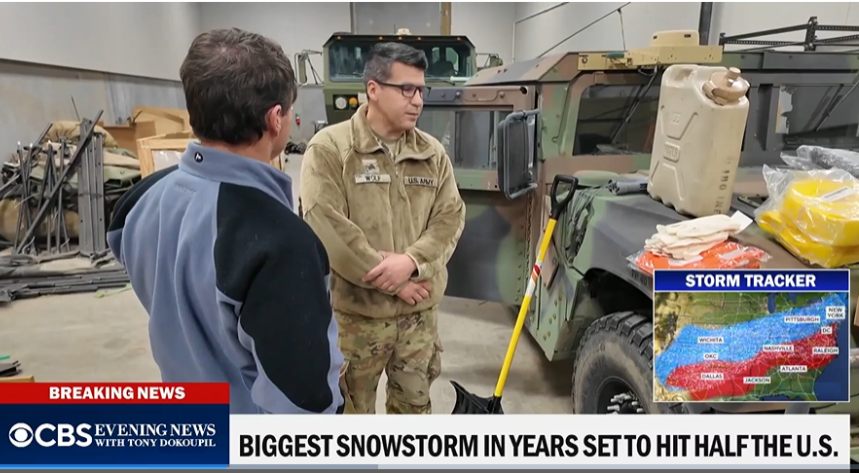
Like many people around the country, we are bracing for an intense winter storm. Yesterday (Fri.) our church decided to pull the plug on all in-person gatherings on Sunday.
Speaking of “pulling the plug,” the plugs in our home won’t do us much good if the power goes out. My late brother-in-law gave us a generator ten-plus years ago, we’ve only used it a few times. But now it’s gassed up and ready to go if needed. Ditto for the kerosene heater.
One good thing about power outages is, they make us acutely and suddenly aware of how much we rely on all things electronic. I’m a bit embarrassed to admit that the thought of a day without use of my phone, iPad, computer, and a bunch of other things makes me a bit nervous. If we lose power, here’s what I’m planning to do:
Start the generator to keep essential things running (hint: none of the above).
Fire up the kerosene heater.
Check on neighbors and loved ones. This may be a great time to connect with people in a new or deeper way.
Pray for the safety and success of the good people who work to repair and restore.
Remind myself that life without electricity was the norm until a few generations ago. Somehow, they survived.
This month marks the first anniversary of us moving here from where we’d lived for over 20 years. That experience taught me that I never want to move again! The best part of where we are now is that we’re closer to our kids and grandkids. In those frenetic days of buying and selling property and packing I came across a verse that stopped me in my tracks. This verse showed me the reason we were moving and what we were to be about afterwards. Finding this verse when I did infused me with the drive and energy needed to keep going.
Here’s the verse: “So even to old age and gray hairs, O God, do not forsake me, until I proclaim your might to another generation, your power to all those to come” (Psalm 71:18 ESV).
Now that I can spend more time with my kids and their kids, I’m going to be looking for opportunities to tell them a story. The stories will be true, gleaned from actual events years ago. Some will be funny, others not. No matter what the story is, the hero will be Jesus. I’ll tell them about real struggles we faced and how the Lord Jesus showed himself faithful to guide and provide.
We all have stories to tell, the key is telling them well.
I stumbled onto wordpress.com almost accidentally. I was trying to access a blog I’d heard about. After a number of clicks, I came to the place where I could build my own site. I’m surprised I didn’t do something like this sooner, seeing as I’ve been into computers and technology much of my adult life.
So, what’s this blog about? I really don’t know yet. I’m going to try to put a little something here each day and see what shape, if any, comes out of that.